

Innovation case study
The hospital that wouldn't
give it back
How clinicians at Christchurch Hospital co-designed Cortex, and what a decade of listening to them built.
Chapter one
Paper, pagers, and memory
In the early 2010s, one of New Zealand's largest hospitals coordinated care the way most hospitals still do: on paper, over pagers, and in the heads of the people walking its corridors.
Scribbled patient lists
Folded into pockets and rewritten every shift. Whatever didn't get copied across was gone by handover.
Pages without replies
A callback number with zero context. Once the call ended, the exchange left no record.
Decisions in corridors
Clinical reasoning exchanged in hallways and phone calls, gone by the next shift.
Chapter two
How the partnership worked
Cortex began as an innovation partnership. Sense Medical and the Canterbury District Health Board built it together from the start, under the DHB's Via Innovations programme, and the way the partnership was structured mattered as much as the technology.
Clinicians held the relationship
The relationship ran through medical, nursing, and allied health champions in each department rather than the IT desk.
Executives facilitated
Leadership created a permissive environment with guardrails, and stayed out of the design.
A clinician embedded weekly
A Sense Medical clinical team member worked inside the hospital one day a week, keeping development honest.
One department first
Ring-fenced to General Surgery, a team with a declared appetite for change and tolerance for friction.
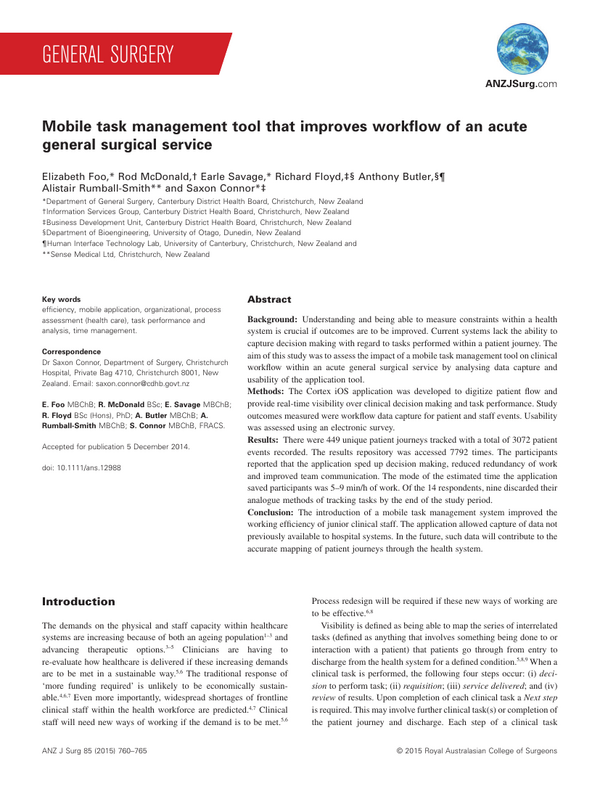
Peer reviewed from the start
Results from the first Cortex deployment in General Surgery were published in the ANZ Journal of Surgery in 2015.
Read the paperChapter three
Twelve weeks in General Surgery
Through the winter of 2017, the surgical wards ran a prospective study of Cortex in daily use. Use was voluntary throughout, and by the end 95% of acute surgical admissions were being documented on it.
- 438
- doctors, nurses, and allied health staff
- 95%
- of acute admissions documented on Cortex, voluntarily
- 269,594
- views of the patient record
- 27,411
- notes, tasks, and orders created
"At the end of our 12 week trial we weren't willing to give it back."
Chapter four
What the measurements showed
Three changes stood out on the trial wards.
- 20%
- reduction in average length of stay
- 12%
- reduction in readmissions
- 15%
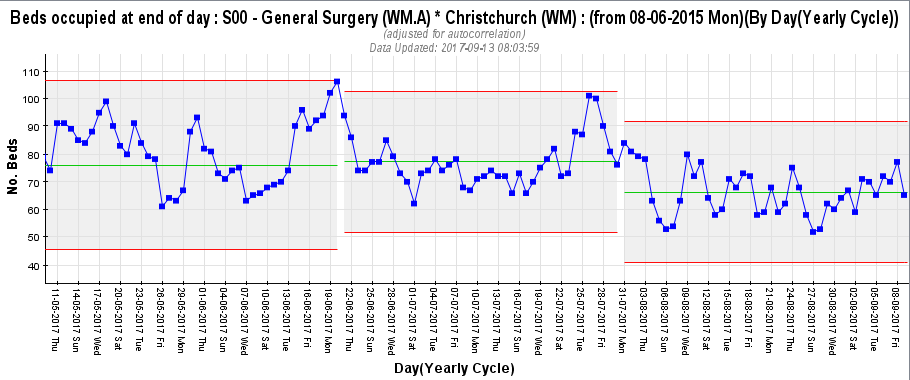
- reduction in total bed nights
In absolute terms: nine fewer surgical beds occupied at the end of each day, and acute stays 0.8 days shorter, both statistically significant against the hospital's own historical baseline.
Independently measured by Lightfoot Solutions and reported by Canterbury DHB.
The pagers went quiet
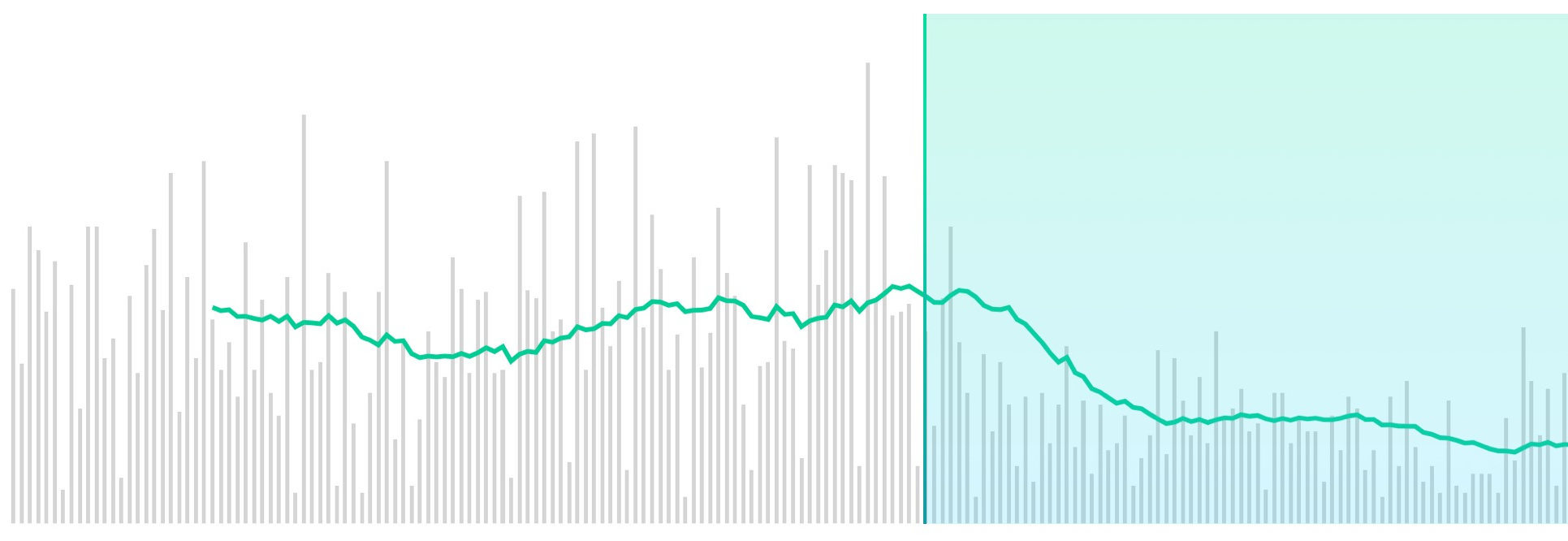
The chart the analysts saw
data sourced from signalsfromnoise
Chapter five
Then the waitlist formed
Departments that had seen Cortex running on a neighbouring ward asked for it themselves. The rollout order was set by demand rather than by an IT plan.
-
2019 · Fourteen departments
11,000 clinical notes a week as the rollout spread ahead of the move to the new Acute Services Building.
-
2020 · Three years in six weeks
COVID-19 made paper a liability. A planned three-year nursing rollout was condensed into six weeks, with new screening and referral workflows built in days. By July, clinicians had created their millionth note.
-
2021 · The whole campus
Maternity went live in December, completing every specialty at Christchurch Hospital: 45,000 notes a week, five thousand clinicians a month.
-
2023 · Beyond Canterbury
Emergency Calls replaced pagers at Hawke's Bay, Nurse Maude Hospice brought Cortex into community palliative care, and Burwood and the West Coast began.
-
2025 · Across the Southern Alps
Ashburton and Greymouth's Te Nīkau Hospital went live, sharing one clinical record between rural coast and tertiary centre.
Chapter six
Burwood and the West Coast
In 2025, Health New Zealand ran its own analysis of two of the sites that followed Christchurch, using the health system's own data. The Canterbury results repeated at both.
- 19%
- shorter average stay at Burwood within ten months of go-live, from 7.92 days to 6.38
- 16%
- fewer readmissions at Greymouth's Te Nīkau Hospital, including a 13% drop in General Medicine
- 18–23%
- fewer complaints across Burwood and the West Coast since the move from paper
Figures from Health New Zealand's 2025 analysis of Cortex sites in Te Waipounamu.
The product, over time
It started as scribbles
This is what coordinating a surgical ward actually looked like: folded paper lists, handwritten margins, ticked boxes. The first version of Cortex was drawn before it was coded, translating those scribbles into a screen.
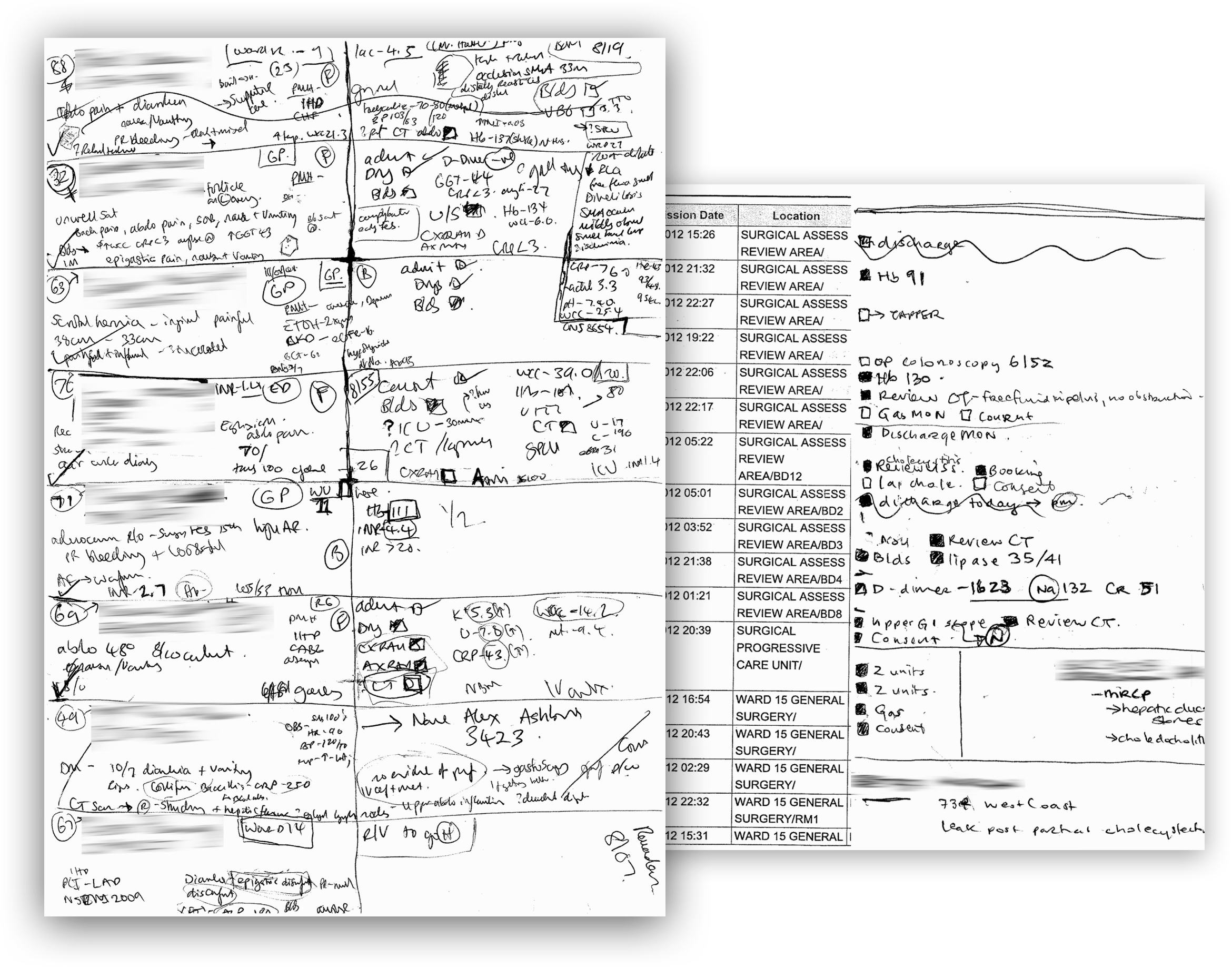
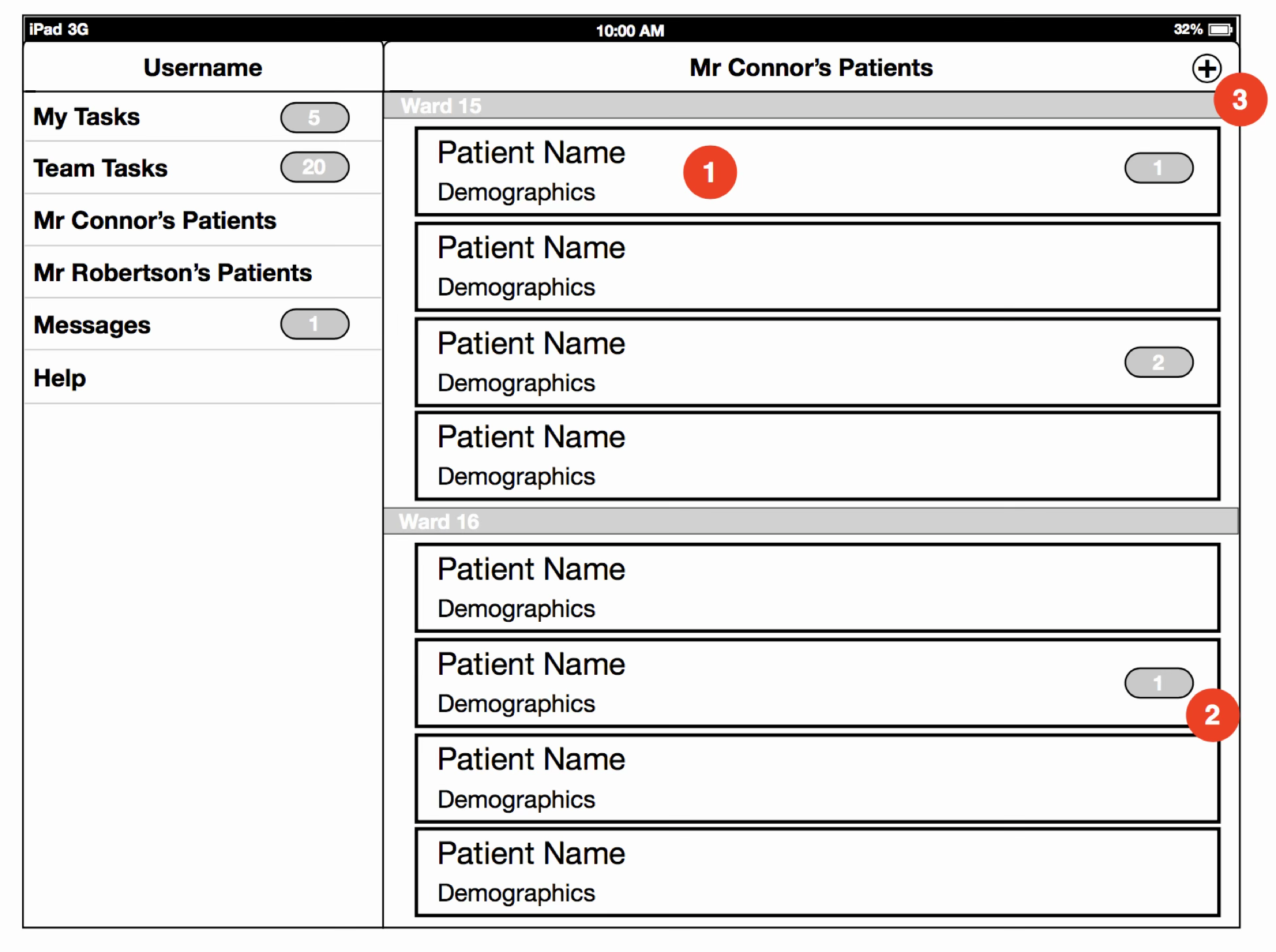
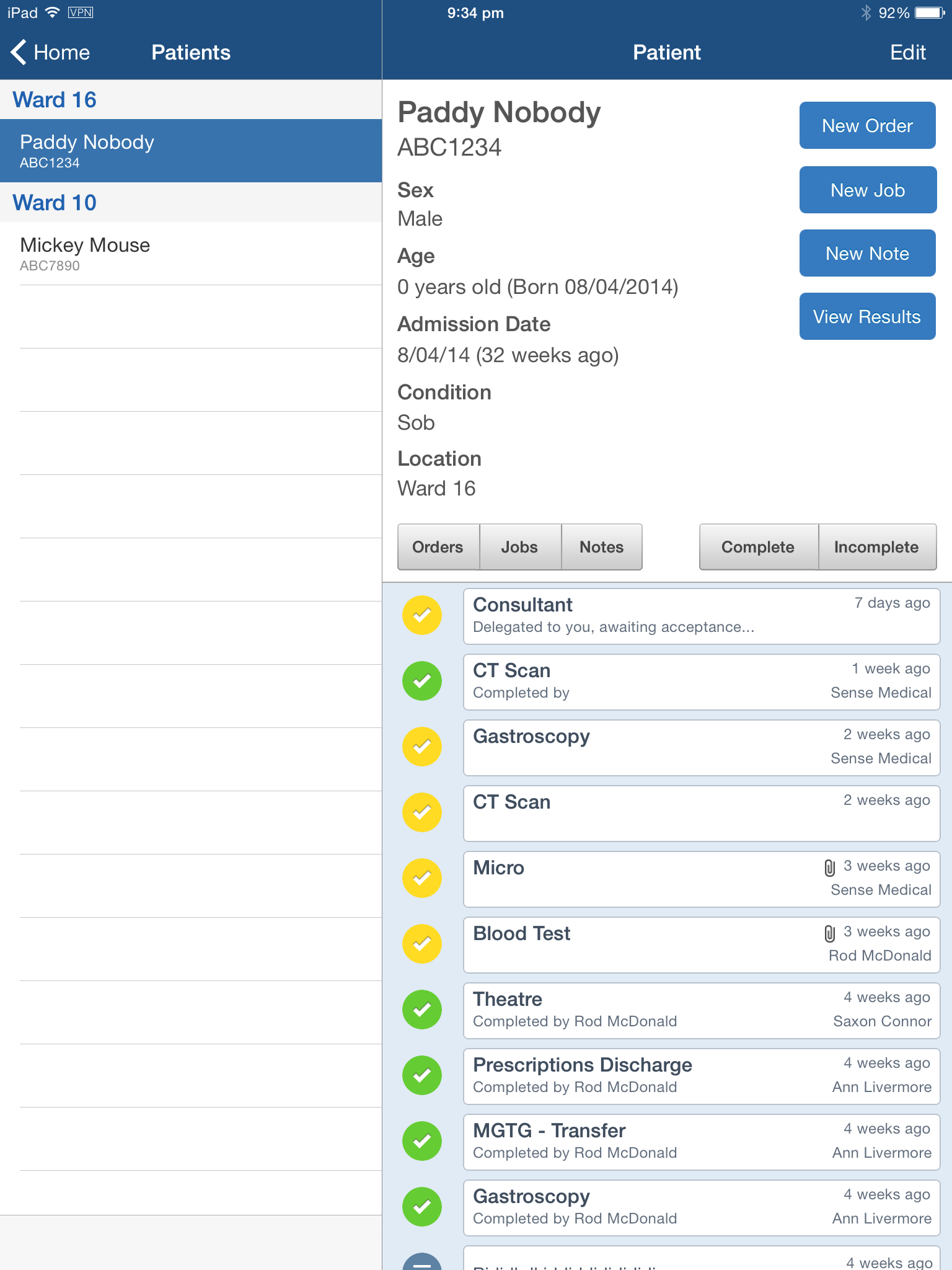
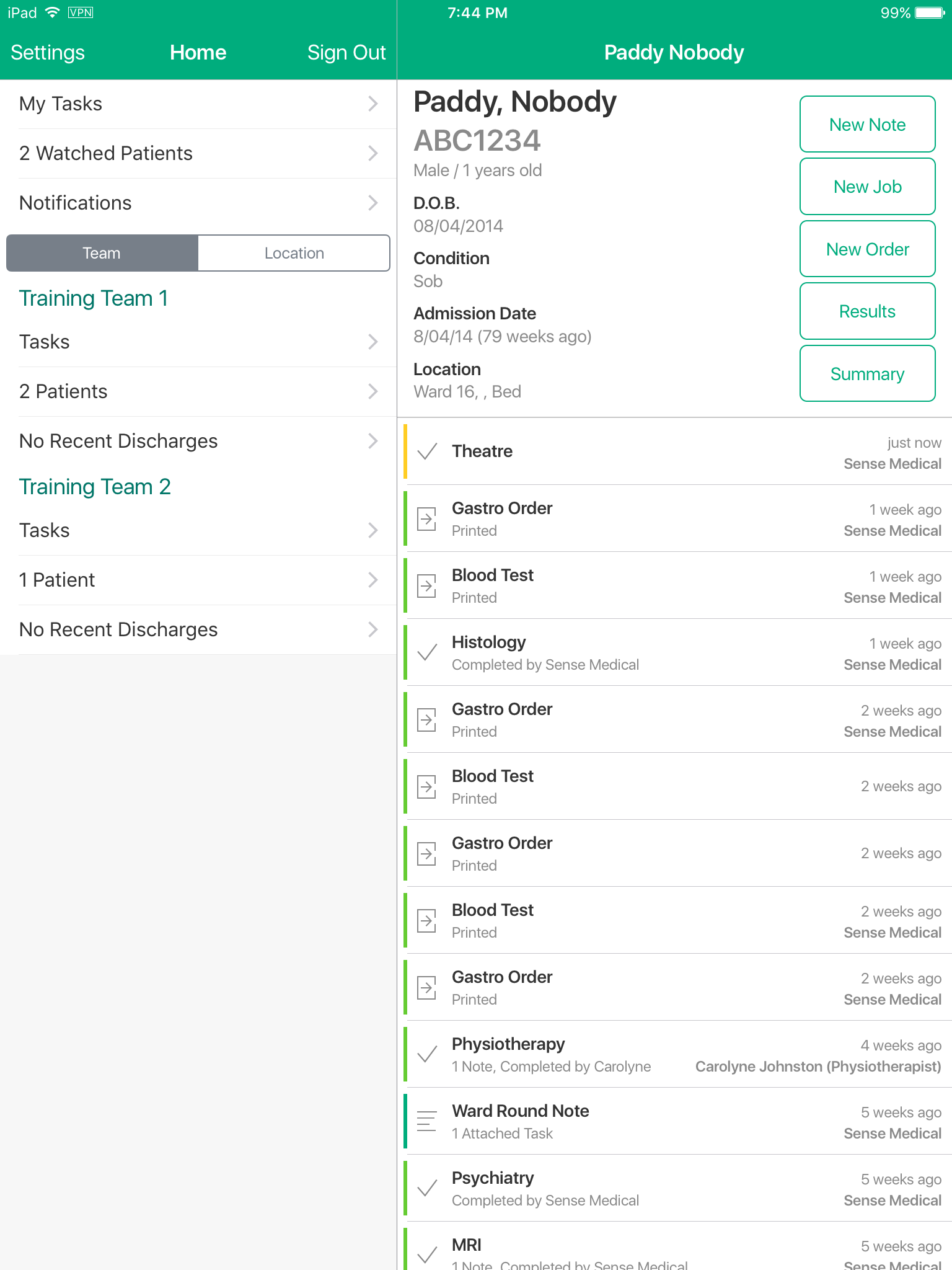
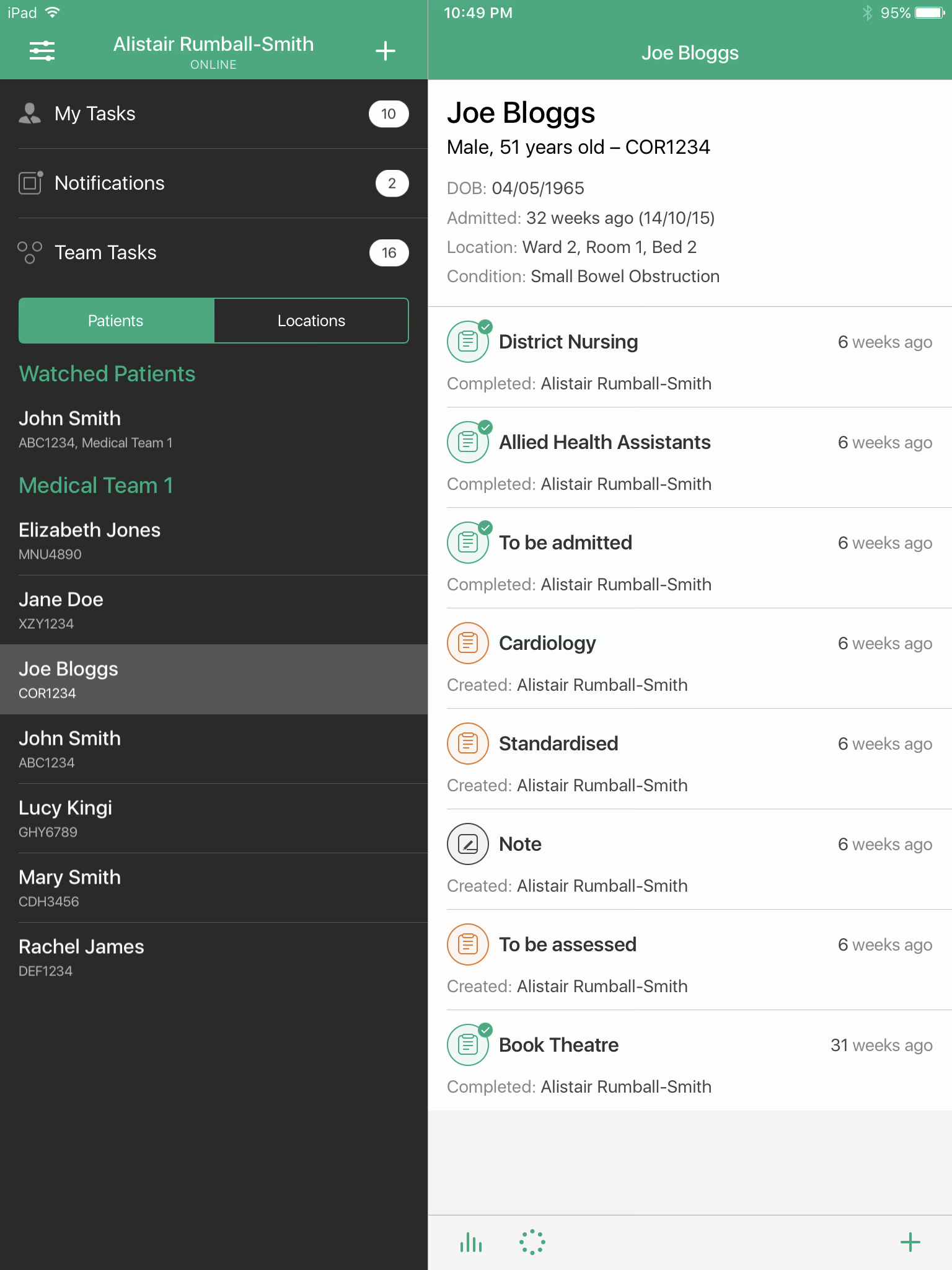
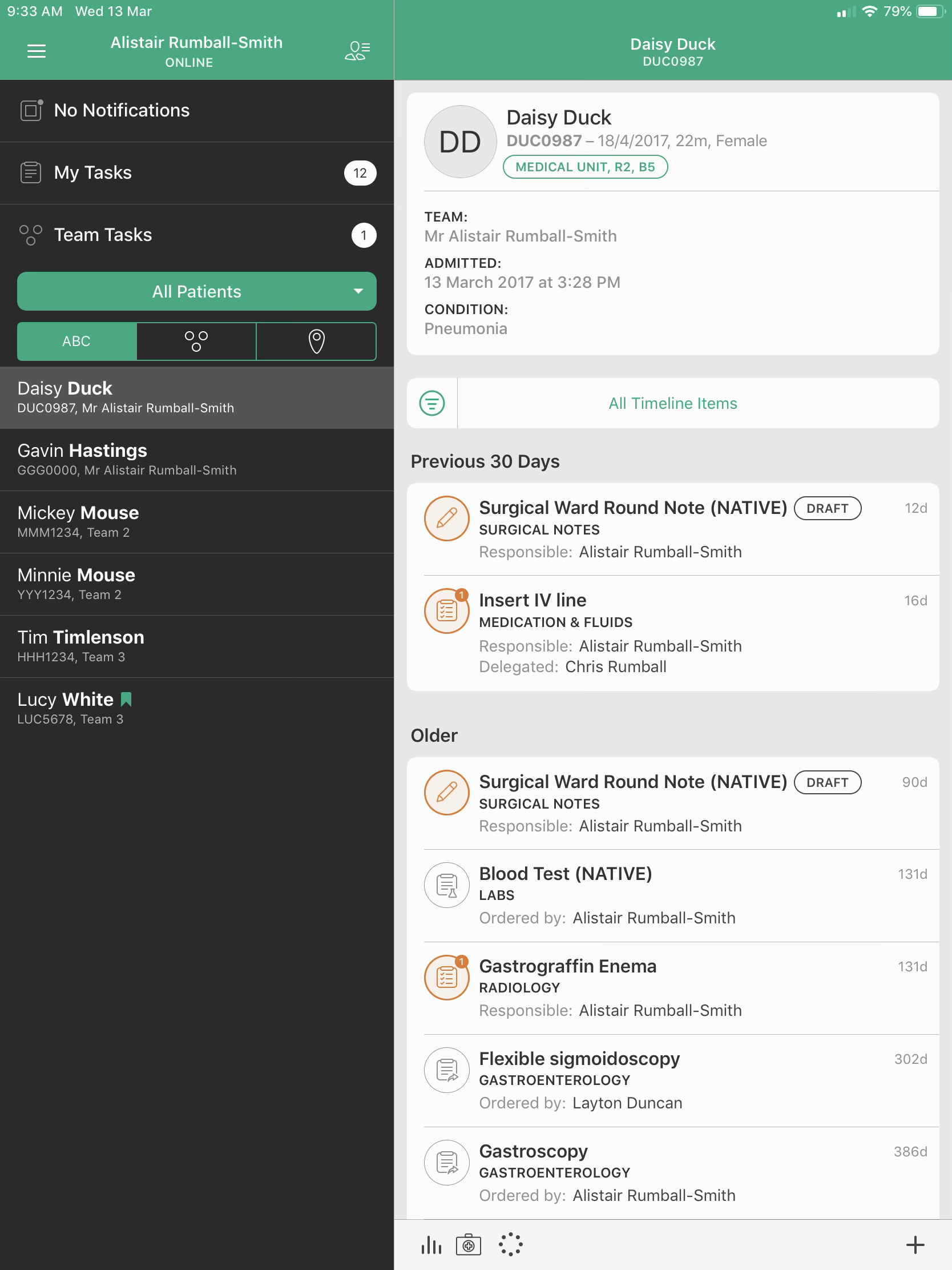
Four versions on, the structure hasn't changed: the patient's record in the middle, with the team's tasks and conversations attached to it.
Chapter seven
Why it worked
No training required
Cortex follows the iOS conventions clinicians already know from their own phones, so nobody sits a training course before their first shift with it.
Clinicians build their own workflows
With Cortex Designer, clinical teams design, approve, and publish their own forms and workflows without writing code or waiting on a vendor.
Decisions stay with the record
Every conversation is tied to a task, a patient, and the record, so the reasoning behind each decision travels with the patient.
Ten years on
- 2M+
- clinical tasks
- 16M+
- clinical documents
- 1M+
- patient records
- Every
- specialty and discipline
"What makes Cortex remarkable and unique is that it brings together medicine, nursing, and allied health and enables clinician designed workflows with a task and communication platform for the interdisciplinary team… Ward rounds have been transformed with decisions made and tests activated at the bedside in real time. I have not seen a comparable solution anywhere."
Bring Cortex's impact to your hospital
Talk to the team that built it, deployed it, and stayed.